


If your child is becoming more nearsighted every year, it may be more than a routine prescription change. Myopia management is a proactive approach to slowing the progression of nearsightedness in children protecting not just how well they see today, but the long-term health of their eyes. At Eyecare Associates of Lewistown, we help local families understand their child’s risk and explore options to intervene early.

Myopia, commonly known as nearsightedness, occurs when an eye is too long or its focusing structures are too powerful for its length. Instead of focusing light directly on the retina, the eye focuses it just in front, blurring distance vision. This is corrected with negatively powered lenses, glasses or contact lenses. Myopia is one of the most common refractive errors we see, and while it’s easily corrected, how it develops and progresses in childhood matters a great deal for long-term eye health.
Most children are naturally farsighted early on, with their eyes reaching adult length by around age six. Some children begin showing signs of myopia at or before this age, while others develop it later, often during growth spurts or as a result of extended near work, reading, tablets, and screens. Understanding when and how myopia appears in your child helps us determine whether it’s a stable, typical prescription or one that may need closer monitoring.
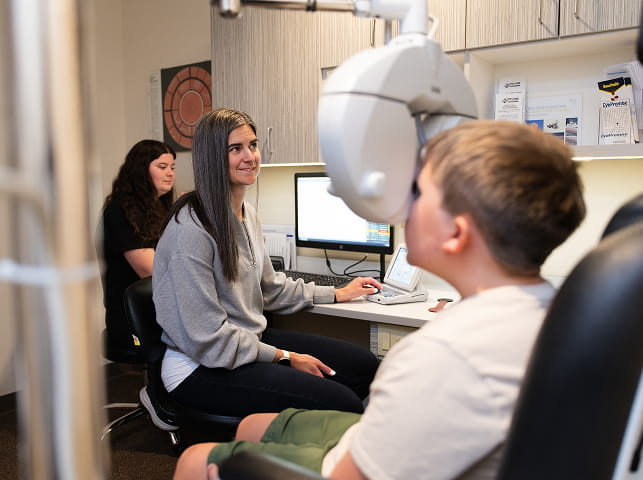
When a child’s myopia worsens by a full diopter or more per year, it’s worth paying close attention. Progressive myopia can lead to significant refractive error that becomes harder to correct with glasses or contacts alone, and high myopia can disqualify patients from future LASIK or PRK surgery. Just as importantly, the physical lengthening of the eye associated with progressive myopia raises the long-term risk of serious retinal complications, including retinal holes and detachment.
Early monitoring makes a difference, schedule your child’s exam today.
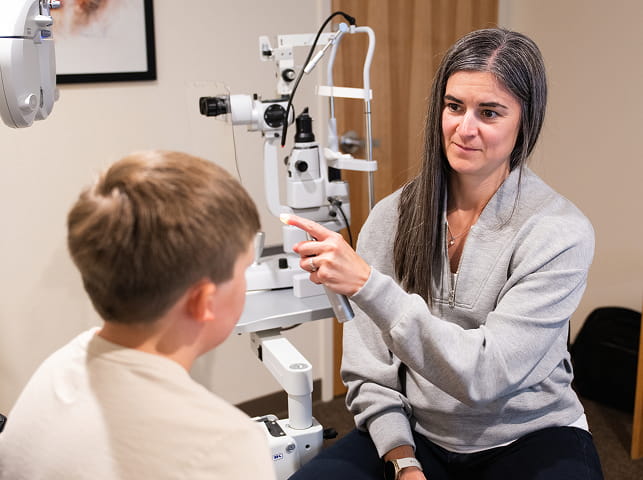
Rising rates of childhood myopia, driven in part by increasing near-work demands have led to real, evidence-based options for slowing its progression. These range from specially designed glasses that reduce visual stress during near work, to prescription eye drops, to soft contact lenses engineered specifically to influence the signal believed to drive eye elongation. The right option depends on your child’s age, prescription, and how their myopia is progressing, which we’ll walk you through together.
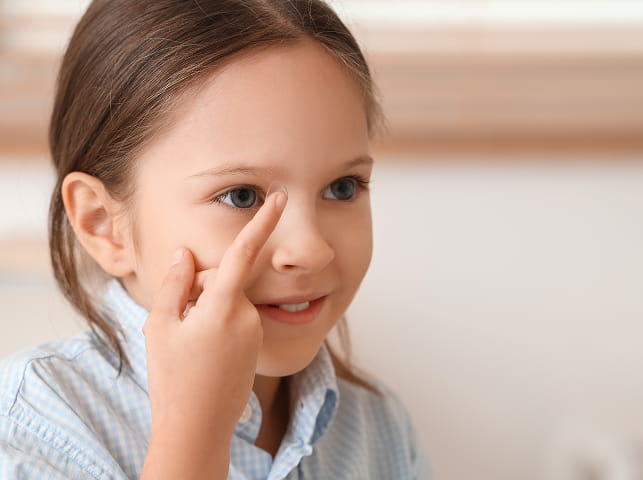
For many children ages 6 to 12 showing signs of progressive myopia, specialty contact lenses offer one of the most effective intervention options available. These lenses work by defocusing light in the peripheral retina, reducing the signal that drives the eye to keep lengthening. They’re worn as daily disposables and replaced each day for comfort and eye health. Fitting and follow-up care is more involved than a standard contact lens fitting, with more frequent visits to closely monitor your child’s progress.
Ask if your child is a candidate, speak to our friendly, qualified team.
Children should have their eyes examined regularly starting in early childhood. If nearsightedness runs in your family or your child struggles to see the board at school, an exam sooner is a good idea.
Rapid changes in prescription, frequent squinting, or needing new glasses more than once a year can all be signs. A comprehensive exam is the only way to confirm the rate of progression.
No, the goal is to slow progression, not reverse it. Myopia management aims to reduce how much a child’s prescription worsens over time, lowering their long-term risk of high myopia and related complications.
Coverage varies by plan and often differs from routine vision benefits. Our team can help you understand what’s covered before starting treatment.