


Seeing spots, cobwebs, or streaks of light drifting across your vision can be unsettling — and while floaters are often harmless, a sudden change is never something to ignore. At Eyecare Associates of Lewistown, we provide prompt dilated evaluations for patients throughout Fergus County experiencing new flashes or floaters, helping rule out retinal tears, detachment, and other sight-threatening conditions.

Floaters are small spots, threads, or cobweb-like shapes that drift through your field of vision, especially noticeable against a bright background like a clear sky or blank wall. What you’re actually seeing is the shadow cast by tiny clumps of protein and collagen fibers floating within the vitreous, the gel-like substance filling the back of your eye. Most floaters are a normal part of aging and aren’t cause for alarm — but a sudden increase deserves prompt attention.

Most sudden floaters and flashes stem from posterior vitreous detachment (PVD), a natural process where the vitreous gel liquefies and gradually separates from the retina with age. As it pulls away, it can release a single large floater known as a Weiss ring. PVD itself is usually harmless, but the traction it places on the retina during separation occasionally causes a tear, which is exactly why any sudden onset deserves a prompt, dilated examination.

Long-standing, stable floaters you’ve had for months or years are rarely an emergency. But contact us immediately if you notice a sudden shower of new floaters, new flashes of light, a dark curtain or shadow moving across your vision, or any sudden loss of peripheral vision. These symptoms can indicate a retinal tear, detachment, or vitreous hemorrhage — conditions where timely treatment protects your sight. Don’t wait on new symptoms, Call us now.
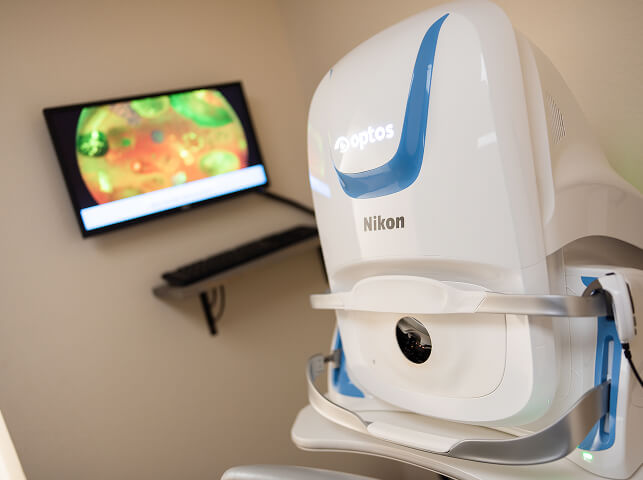
A dilated eye exam allows our doctors to examine your retina and vitreous in detail, distinguishing routine floaters from a true emergency. Most floaters need no treatment beyond monitoring, while a retinal tear may require prompt in-office or surgical repair — and we coordinate directly with regional retinal specialists when advanced care is needed. Our Lewistown team is equipped to evaluate urgent symptoms quickly, so you get answers and, if necessary, treatment without delay.
Yes, most floaters are a normal result of aging as the vitreous gel changes consistency. They become more common after age 50 and are usually harmless, especially if they’ve been present and unchanged for some time.
See us promptly if you notice a sudden increase in floaters, new flashes of light, or a shadow or curtain across your vision. These can signal a retinal tear or detachment, which need urgent evaluation to help prevent permanent vision loss.
A Weiss ring is a single, ring-shaped floater that appears when the vitreous fully separates from the optic nerve during posterior vitreous detachment. Its sudden appearance is common with PVD and should still be checked to rule out retinal damage.
Floaters often become less noticeable over time as your brain adapts and they settle out of your direct line of sight, though they don’t typically disappear entirely. Severe or vision-obstructing floaters can sometimes be treated, which your optometrist can discuss with you.
Yes. Dilation gives our doctors a full view of your peripheral retina, where most tears and detachments occur, ensuring nothing is missed during your evaluation.