


Diabetes affects more than your blood sugar. It can also affect your eyes in ways you may not notice until vision changes appear. At Eyecare Associates of Lewistown, we work with patients across Fergus County to protect long-term eye health through regular monitoring, early detection, and coordinated care alongside your primary physician. Managing diabetes well starts with knowing what to watch for.

Diabetic retinopathy develops when high blood sugar damages the small blood vessels in your retina. Damaged vessels can leak blood or fluid, or fail to deliver enough oxygen to retinal tissue. Over time, this can lead to hemorrhages, swelling, and the growth of abnormal new blood vessels that are fragile and prone to bleeding. Left unmonitored, diabetic retinopathy can progress silently and threaten your vision. Notice any vision changes?
The macula is the part of your retina responsible for sharp, central vision. When fluid leaks into this area, it causes diabetic macular edema, a condition that can blur or distort your central sight. It can develop on its own or alongside diabetic retinopathy, and it doesn’t always cause noticeable symptoms in its early stages. Regular retinal imaging helps us catch it before it affects your daily life.
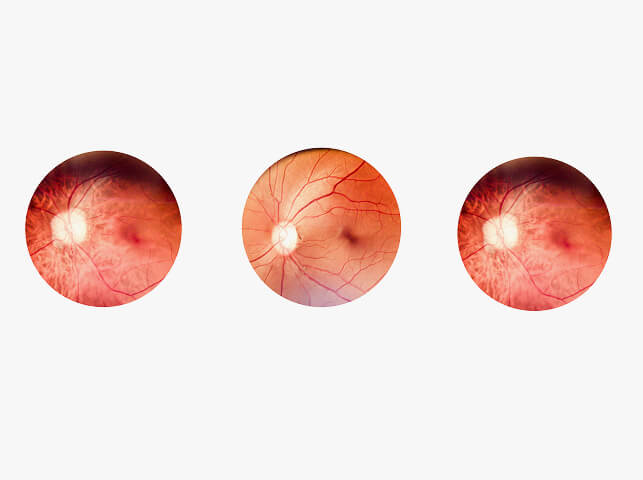

Your eyes offer a rare window into your overall health. They are the only place in the body where blood vessels and nerves can be examined directly, without surgery or invasive testing. Changes we see in your retina can point to how diabetes is affecting your cardiovascular system and kidneys, sometimes before other symptoms appear. This makes your eye exam an important part of your broader diabetes care.
Most patients with diabetes should have a dilated eye exam every year, even without vision changes. If we find signs of retinopathy or macular edema, we may recommend more frequent visits to track progression closely. For more advanced cases, we coordinate referrals to retina specialists who provide injectable treatments and specialized care. Our goal is to catch problems early and keep your vision stable for the long run. Due for your annual exam? Call (406) 535-2020 today.
Yes. Even well-managed diabetes can affect the eyes over time, which is why annual dilated exams are recommended for every diabetic patient, regardless of how stable your blood sugar has been.
Not usually. Blurriness caused by blood sugar fluctuations often improves once glucose levels stabilize. Blurred vision should still be evaluated, though, to rule out other causes such as diabetic retinopathy.
Most diabetic patients need a dilated eye exam once a year. If retinopathy or macular edema is present, your optometrist may recommend more frequent visits to monitor changes closely.
Treatment depends on severity. Early stages are typically monitored closely, while more advanced cases may be referred to a retina specialist for injectable treatments or other specialized care.
Yes. Your retina is the only place in the body where blood vessels and nerves are visible without surgery, so it can reveal early signs of cardiovascular or kidney stress related to diabetes.