


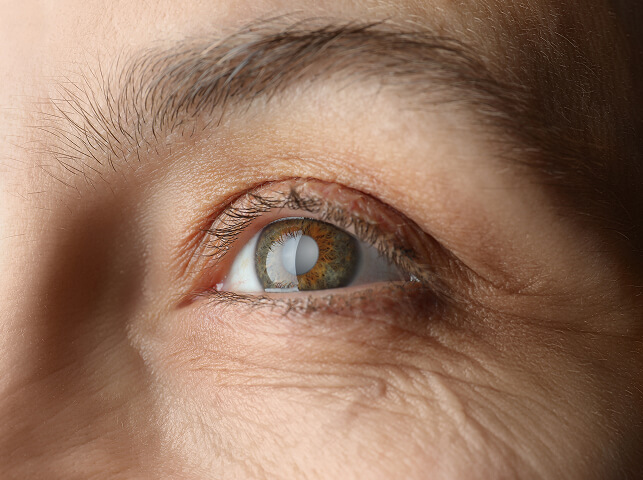
A cataract is a clouding of the eye’s natural lens, and for most people it’s simply an inevitable part of aging, the lens continues to thicken throughout life, and that clouding can begin years before it affects your vision. The most common form, nuclear sclerosis, develops gradually with age, while posterior subcapsular cataracts can appear earlier and progress faster. Either way, once clouding advances, light scatters instead of focusing clearly, and vision changes follow.
Early cataracts often show up as increased glare or halos around headlights at night and difficulty reading in less-than-ideal lighting. As they progress, you may notice colors looking faded or yellowed, overall blurriness, or your glasses prescription changing more frequently than usual. These changes are typically gradual, which is why many patients don’t realize how much their vision has shifted until it’s assessed during a comprehensive exam.
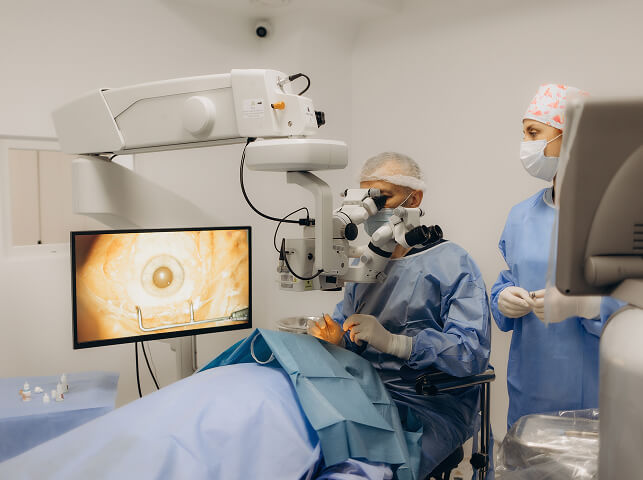

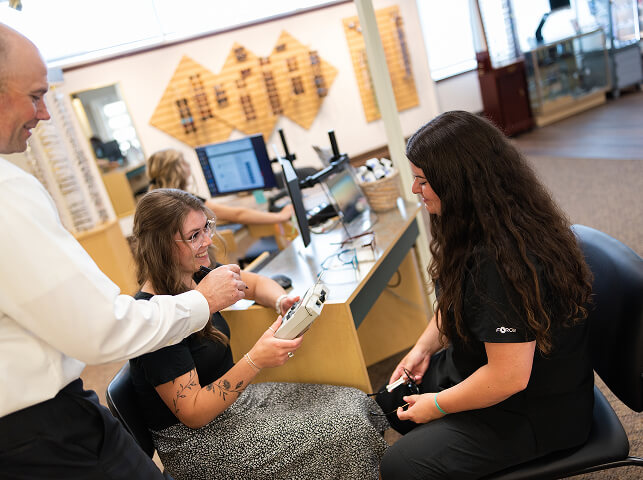
You don’t have to navigate cataract surgery alone or far from home. Our team handles your pre-operative evaluation and candidacy assessment, then manages your recovery with a proven follow-up schedule, checkups at one day, one week, one month, and six months after surgery, working closely with your surgeon throughout. For patients across Fergus County, that means expert surgical outcomes paired with the local, attentive care you already know.
Cataracts are primarily caused by the natural aging process, as the lens inside the eye gradually thickens and clouds over time. Some cataracts, like posterior subcapsular cataracts, can develop earlier and progress more quickly.
Common early symptoms include glare or halos around lights at night, difficulty reading in dim lighting, and colors that appear duller than usual. A comprehensive eye exam can confirm whether a cataract is developing.
Cataract surgery is generally quick and well-tolerated, with most patients experiencing minimal discomfort. Recovery time is typically short, and each eye is treated separately to allow proper healing between procedures.
It depends on the lens implant you choose. A multifocal lens implant can reduce or eliminate the need for reading glasses, while a standard lens implant may still require glasses for certain tasks — we’ll help you decide what’s right for you.
Often, no. Cataract surgery is performed monthly at the local hospital, and our team manages the majority of your pre- and post-operative visits right here in Lewistown.