


At Eyecare Associates of Lewistown, a comprehensive eye exam is about far more than your glasses prescription. Our thorough evaluations screen for glaucoma, cataracts, macular degeneration, and signs of diabetes, hypertension, high cholesterol, and cardiovascular disease. For patients across Lewistown and Fergus County, this is often the first line of defense in catching serious health conditions early.
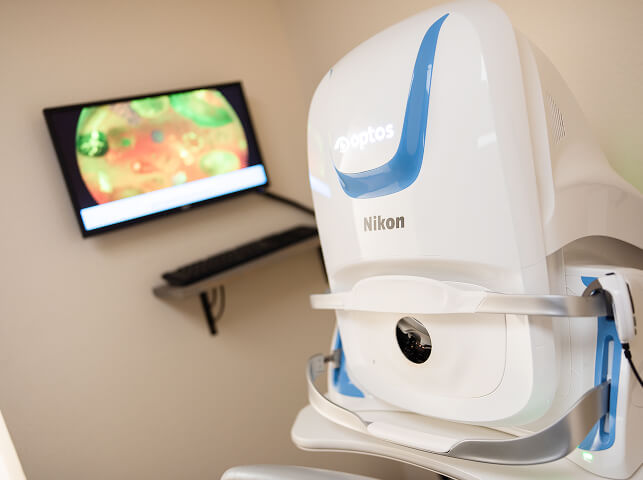
Every exam begins with advanced automated diagnostic equipment that captures precise baseline readings of your visual system. From there, your optometrist builds on that data, testing and fine-tuning throughout your visit to arrive at the most accurate, reliable prescription possible. This combination of technology and hands-on clinical expertise means you leave with results you can trust and a clear picture of your eye health, not just a number for your next pair of glasses or contacts.
Your yearly eye exam deserves the same priority as your annual physical. In fact, most Americans rank eyesight as their most valued sense yet it’s easy to take for granted until something changes. Even with stable vision and no prescription changes, your eyes should still be examined every year. Many serious eye and systemic diseases develop with no early symptoms, which is exactly why routine care matters.
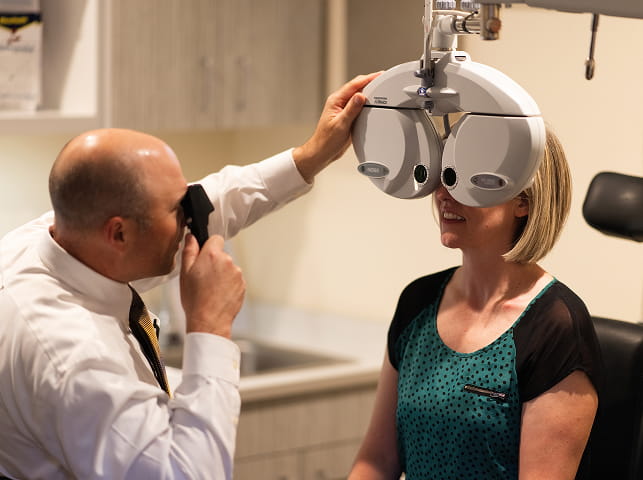
Pupil dilation is one of the most valuable parts of your comprehensive exam. With your pupils dilated, our doctors get a clear, wide view of your retina and optic nerve, allowing us to detect subtle early changes linked to glaucoma, macular degeneration, cataracts, retinal vascular disease, retinal holes or tears, hypertension, diabetes, and even certain cancers. This step is crucial to early detection, giving us the chance to act quickly and guide you toward better long-term visual and overall health.
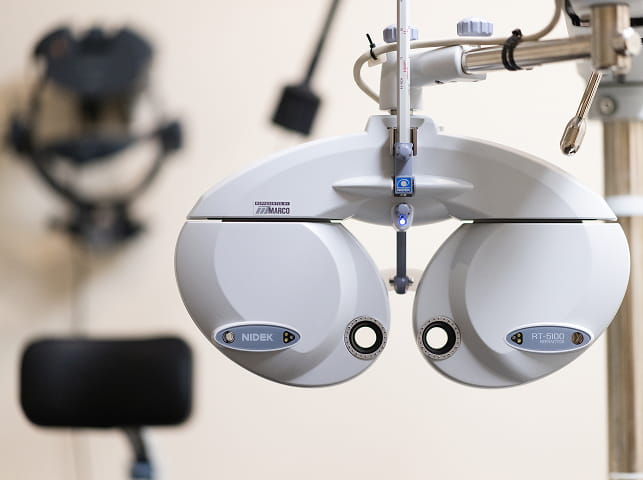
Refraction is how we sharpen your vision to its full potential, measuring exactly how your eyes focus on objects near and far. Uncorrected focusing issues can cause headaches, eyestrain, and discomfort during reading, needlework, or other close-up tasks. Based on your results, we can recommend tailored solutions including near-point and computer prescriptions, bifocal or progressive adds, and vision therapy so your eyewear works as hard as you do, whether you’re at a desk, in the shop, or out on the ranch.
Your eyes offer a window into your overall health, which is why our exams look well beyond visual acuity. During your visit, we evaluate your risk for glaucoma, cataracts, and macular degeneration, while also checking for signs of diabetes, hypertension, high cholesterol, and cardiovascular concerns. Many of these conditions show their earliest signs in the eyes before symptoms appear elsewhere.
One appointment, whole-health insight call (406) 535-2020 to schedule your screening.
Most comprehensive exams take 45 minutes to an hour, depending on your history, whether your pupils are dilated, and any additional testing needed for your health screening.
Dilation is recommended annually for most patients, as it allows the clearest view of your retina and optic nerve for detecting early disease. Your optometrist will confirm what’s right for you.
Yes. Many eye and systemic diseases, including glaucoma and diabetes, develop without early symptoms. Annual exams catch changes in your eye health long before your vision is affected.