


Contact lens technology has come a long way, making comfortable, healthy contact lens wear an option for more patients than ever before. But contact lenses are a medical device, not an off-the-shelf accessory, a proper fitting is essential for both sharp vision and the long-term health of your eyes.
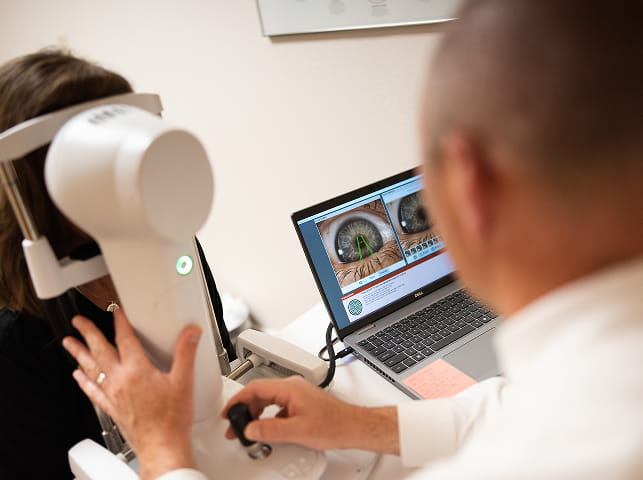
A complete eye exam is always the first step in a successful contact lens fitting. Before recommending any lens, we confirm there are no underlying ocular health conditions that could make contact lens wear unsafe. Once your eyes are cleared, we use the refractive data from your exam and your precise prescription as the foundation for selecting the lens that’s right for your eyes, your vision needs, and your lifestyle needs.
Selecting the right contact lens involves more than just your prescription. The shape and size of your cornea is one of the most important factors in fit, comfort, and long-term eye health. Even when a lens looks ideal at your first visit, we often schedule a second appointment to see how it settles and performs after several hours of real-world wear because comfort at hour one doesn’t always mean comfort at hour eight.
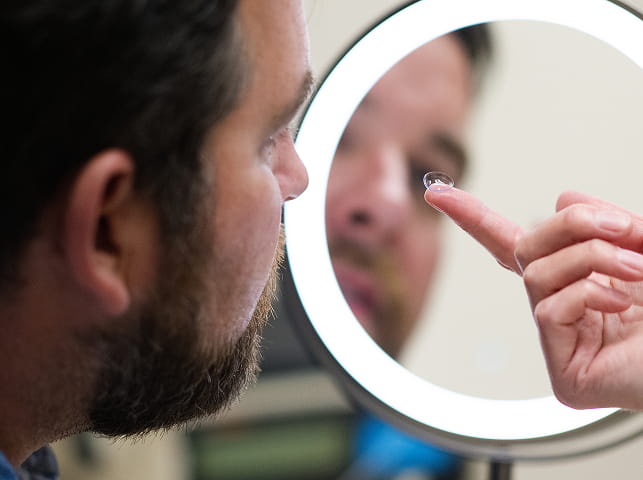
Once your lens is selected, hands-on training in proper application and removal is essential to your success as a contact lens wearer. We take the time to make sure you’re comfortable and confident with the process, and for some patients, this training happens across more than one visit. Whether you’re new to contacts or returning after years in glasses, we make sure you leave prepared. Ready to get started?

After training, you’ll take home a set of diagnostic lenses to wear for one to two weeks in your everyday life at work, outdoors, and everywhere in between. At your follow-up visit, we reevaluate both the fit and your vision, making any adjustments needed before finalizing your prescription. This trial period is what separates a lens that looks fine in the exam chair from one that truly works for your daily life.
Your initial exam and fitting typically takes longer than a routine eye exam, since it includes additional measurements and lens selection. Follow-up visits are usually shorter, focused on fine-tuning fit and vision.
In most cases, yes. Whether you’re a first-time wearer or returning to contacts after years away, our team will guide you through fitting and training at a pace that works for you.
Many patients who don’t fit standard soft lenses do well with specialty options like scleral lenses, CRT, or RGP lenses. A contact lens exam is the best way to find out what will work for your eyes.
Coverage varies by plan and often differs from routine eye exam coverage. Our team can help you understand your vision insurance benefits before your appointment.